
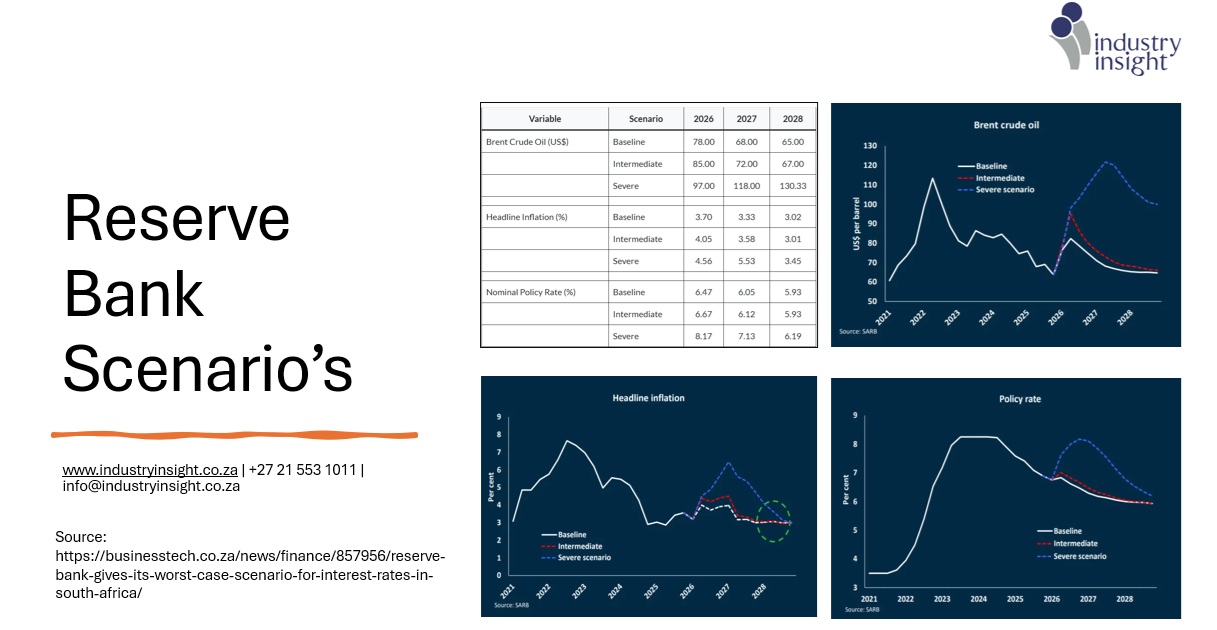
The South African Reserve Bank (SARB) has outlined a set of risk scenarios highlighting how escalating geopolitical tensions—particularly in the Middle East—could materially worsen South Africa’s inflation and interest rate outlook. In its severe (worst-case) scenario, the SARB assumes a prolonged conflict lasting over a year, with significant disruption to global energy supply routes such as the Strait of Hormuz and Red Sea corridor. This would drive a sustained surge in oil and energy prices, placing upward pressure on domestic inflation. Under this scenario, South Africa would face a sharp deterioration in financial conditions, including a roughly 10% depreciation in the rand and a 20% increase in risk premiums. Inflation would rise well above target and remain elevated for longer, with second-round effects (e.g. wages and broader price increases) becoming more entrenched. Crucially, the SARB indicates that such conditions would require a more aggressive monetary policy response, implying potential interest rate hikes or prolonged higher rates to prevent inflation expectations from becoming unanchored. This contrasts with earlier expectations of rate cuts, reinforcing a “higher-for-longer” interest rate environment in a downside risk scenario.
Overall implication for construction: The SARB’s worst-case scenario not only points to tighter financing conditions and rising input costs, but also a broader macroeconomic drag. Higher interest rates would likely suppress GDP growth, which in turn constrains government revenue and fiscal space. This raises the risk of downward pressure on public sector infrastructure spending, either through budget cuts, reprioritisation, or delays in project rollout. Combined with elevated borrowing costs, this could further weaken both public and private sector construction activity, reinforcing a more subdued outlook for the industry.
Original article published by Business Tech: https://businesstech.co.za/news/finance/857956/reserve-bank-gives-its-worst-case-scenario-for-interest-rates-in-south-africa/